
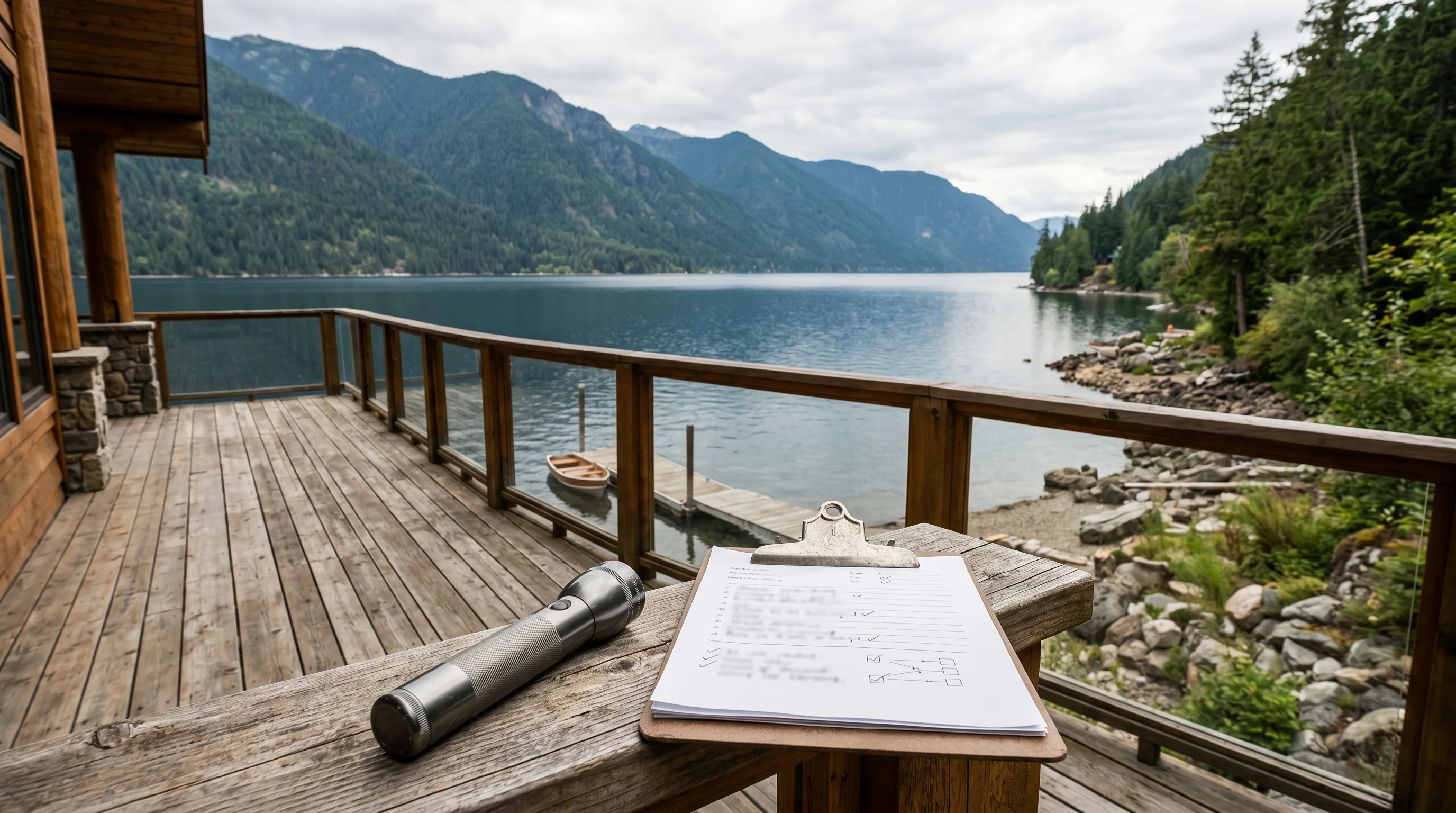
Home Inspection Guide for Rural and Waterfront Property
What standard inspections may miss and when to bring in septic, well, roof, structural, insurance, or waterfront specialists.
- 7 minRead Time
- BCContext
- SourcesLinks
- LocalNext Step
A normal inspection may not be enough
General home inspections are useful, but rural and waterfront properties can involve extra systems and site questions. Septic, water, wells, drainage, docks, roofs, retaining walls, access, outbuildings, and insurance may need separate review.
Specialists answer specialist questions
A good inspection plan asks who should answer each risk. A home inspector, septic professional, well specialist, structural engineer, roofer, insurer, and local authority may all have different roles.
Use the inspection to decide, not negotiate blindly
Inspection findings should help the buyer understand ownership, timing, repair risk, insurance, and whether the property still fits. Not every issue is fatal, but hidden systems should not be ignored.
What to confirm
before moving forward.
- Book a licensed home inspector
- Decide if septic, well, roof, structural, or dock review is needed
- Ask the insurer about property-specific issues
- Review inspection findings against price and ownership plans
Better questions,
cleaner decisions.
What does a normal inspection not cover here?
Which systems need specialist review?
Would any finding change my offer, insurance, or maintenance plan?
Start here,
then verify locally.
Source links help you check the policy and agency context behind the guide. Always confirm the current rule and how it applies to the specific property.
Keep going
with the next useful question.
Have a property or sale in mind?
Bring the questions early.
Send Luke the property, area, or selling situation you are considering. A few clear questions before a showing, offer, or sale plan can save time and prevent expensive surprises.