
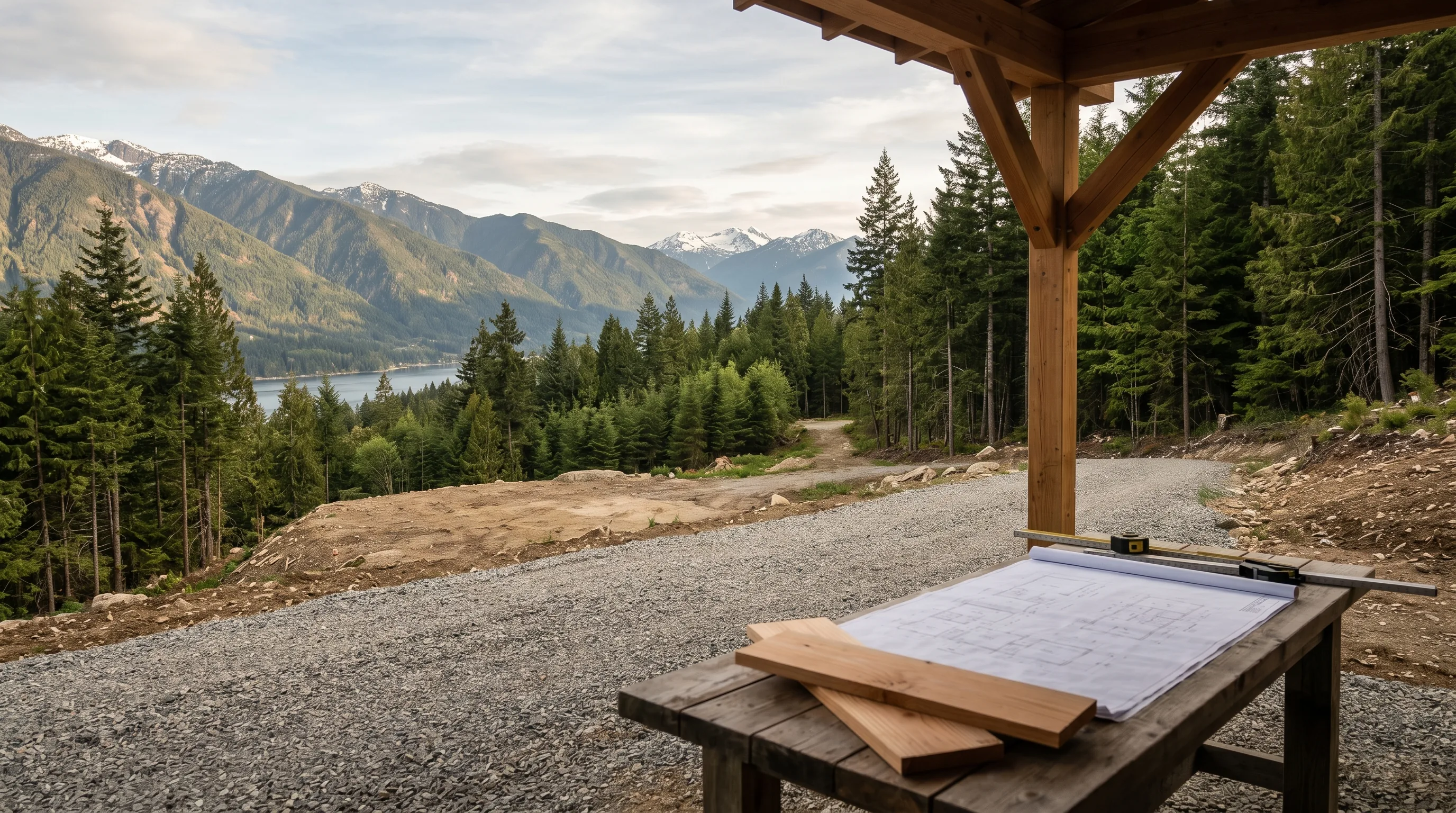
Can You Build or Expand on Rural Kootenay Property?
How to think about zoning, permits, servicing, ALR questions, riparian setbacks, outbuildings, and future use before buying rural land.
- 8 minRead Time
- BCContext
- SourcesLinks
- LocalNext Step
Potential is not permission
Land can feel flexible because there is space around it, but future use depends on zoning, permits, building code, septic capacity, water, access, environmental constraints, ALR status where applicable, and local authority review.
The phrase 'room for a shop' is not the same as permission to build one.
Waterfront and creeks add another layer
Riparian areas, floodplain questions, slope, erosion, foreshore structures, and water licences can affect where and how work is possible. These questions deserve early review on lake, creek, and river properties.
Ask before value gets priced in
If future expansion is part of the reason to buy, verify it before valuing the property as if the expansion is certain. A lawyer, local planner, building official, septic professional, surveyor, and insurer may all have a role depending on the plan.
What to confirm
before moving forward.
- Check zoning and permitted uses
- Review ALR, riparian, floodplain, and environmental constraints where relevant
- Confirm septic, water, access, and power capacity
- Ask the local authority which permits would be required
Better questions,
cleaner decisions.
Can I legally do what I imagine here?
What professional needs to verify the plan?
What would make the project slower, more expensive, or impossible?
Start here,
then verify locally.
Source links help you check the policy and agency context behind the guide. Always confirm the current rule and how it applies to the specific property.
Keep going
with the next useful question.
Have a property or sale in mind?
Bring the questions early.
Send Luke the property, area, or selling situation you are considering. A few clear questions before a showing, offer, or sale plan can save time and prevent expensive surprises.